A heavy rain hits overnight, the snow melts fast, and the ground around your home gets saturated. Most homeowners never think about what is happening under the basement floor until water starts showing up where it should not. If you have ever wondered how does a sump pump work, the short answer is this: it collects groundwater before it reaches your basement floor and pumps it safely away from your home.
That simple job can prevent expensive water damage, mold growth, ruined finishes, and foundation headaches. But like most plumbing systems, the details matter. Knowing how a sump pump works helps you spot trouble early, understand what your system actually needs, and avoid the kind of failure that usually shows up at the worst possible time.
How does a sump pump work in a home?
A sump pump is installed in the lowest part of a basement or crawl space, usually inside a sump pit. That pit is a basin set below floor level so groundwater can drain into it. As water collects in the pit, the pump waits until the level rises to a set point. Then it turns on automatically, pushes the water through a discharge pipe, and sends it away from the foundation.
The goal is not to remove every drop of moisture from the soil. The goal is to relieve hydrostatic pressure and stop excess water from building up under or around the home. In areas with frequent rain, spring thaw, a high water table, or poor drainage, that protection is a big deal.
Most systems work with a float switch. When the water rises, the float lifts. Once it reaches the trigger point, the switch activates the motor. The motor spins an impeller, which creates pressure to move water up and out through the discharge line. When the water level drops, the float lowers and the pump shuts off.
It sounds straightforward because, in principle, it is. The challenge is that every part has to work together under stress, often during storms, power fluctuations, or freezing weather.
The main parts of a sump pump system
The sump pit is where the action starts. Water enters this basin through drains around the foundation, from the soil below the slab, or from natural groundwater seepage. If the pit is too shallow, too narrow, or clogged with debris, the pump may cycle too often or struggle to keep up.
The pump itself is either a submersible model that sits inside the pit or a pedestal model with the motor mounted above it. Submersible pumps are more common in finished or partially finished basements because they are quieter and take up less visible space. Pedestal pumps can last a long time and are easier to service, but they are louder and less discreet.
The float switch is what tells the pump when to start and stop. This part is small, but it is one of the most common points of failure. A stuck float, tangled cord, or misaligned switch can leave a perfectly good pump sitting idle while the pit fills with water.
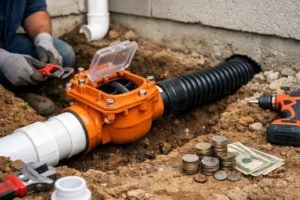
The check valve is another important piece. It sits on the discharge pipe and prevents pumped water from flowing backward into the pit. Without it, the pump has to move the same water repeatedly, which increases wear and can cause short cycling.
Then there is the discharge line. This pipe carries water out of the house to a safe drainage point. If it freezes, clogs, disconnects, or empties too close to the foundation, the system can stop doing its job even if the pump itself is fine.
What triggers a sump pump to turn on?
In most homes, a rising water level triggers the sump pump. The float switch reacts when water reaches a preset height. Some pumps use a tethered float, while others use a vertical float or an electronic sensor. Each design has pros and cons.
Tethered floats are common and effective, but they need room to move freely. In a tight pit, they can snag on the wall or on the pump body. Vertical floats work well in narrower basins, but they can still stick if dirt or scale builds up. Electronic switches reduce moving parts, but they can be sensitive to buildup or electrical issues.
This is why sump pump performance is not just about horsepower. A powerful pump with a bad switch is still a failed system. In real homes, reliability usually comes down to proper sizing, correct installation, and routine inspection.
Where does the water go?
After the pump turns on, water is pushed through the discharge pipe and sent away from the home. That part matters more than many people realize. If the water is discharged too close to the house, it can flow back toward the foundation and re-enter the pit. The pump may keep up for a while, but the system becomes less efficient and works harder than it should.
In colder climates, the discharge line also needs attention. If the outside section freezes, the pump may continue trying to move water with nowhere for it to go. That can burn out the motor, split piping, or lead to a basement backup during winter thaws and early spring storms.
A proper discharge setup should move water far enough away from the structure and be installed in a way that reduces the risk of freezing, clogging, and backflow.
Why some sump pumps fail when you need them most
The most frustrating sump pump failures are not usually dramatic mechanical breakdowns. More often, they are preventable issues that build quietly over time.
Power loss is a major one. Standard sump pumps rely on household electricity, so during a storm-related outage, the pump can stop right when water levels are rising fastest. That is why many homeowners choose a battery backup system. It adds another layer of protection if the primary pump loses power or cannot keep up.
Clogging is another common problem. Dirt, gravel, silt, and small debris can collect in the pit or around the pump intake. Over time, that reduces flow and puts strain on the motor. A missing or damaged pit cover can make this worse.
Age matters too. Sump pumps do not last forever. Many units work reliably for years, but service life depends on usage, installation quality, pump type, and how often the system is tested. A pump in a dry basement may run infrequently and last longer. A pump in a high-water-table area may work much harder and wear out sooner.
Sizing can also be an issue. Bigger is not always better, and undersized is not always obvious until a major storm hits. A pump should match the home’s water conditions, pit dimensions, and discharge setup. If it is wrong for the application, it may short cycle, overwork, or fail to keep pace.
Signs your sump pump may have a problem
Homeowners usually get some warning before a complete failure, but only if they know what to watch for. A sump pump that runs constantly, cycles on and off too frequently, makes grinding or rattling noises, or fails to turn on during wet weather should not be ignored.
Visible rust, vibration, standing water in the pit, or a musty basement smell can also point to trouble. Sometimes the issue is with the pump. Sometimes it is with drainage around the foundation, the check valve, the discharge line, or the electrical supply. It depends on the setup.
If your basement has flooded before, it makes sense to be proactive rather than waiting for the next storm. A quick inspection is usually much cheaper than replacing flooring, drywall, stored belongings, or damaged mechanical equipment.
Do all homes need a sump pump?
No. Some homes are built on lots with excellent grading, well-draining soil, and no history of groundwater intrusion. Others have foundations and drainage systems that make a sump pump essential. Older homes, homes with basements below the water table, and properties in areas with heavy seasonal moisture are more likely to need one.
If you already have a sump pit, that is usually a strong sign the home was designed with groundwater control in mind. In that case, the real question is not whether you need a sump pump. It is whether the one you have is working properly and whether you have enough backup protection for your risk level.
For many property owners, especially those with finished basements or valuable equipment stored below grade, a sump pump is less about convenience and more about risk management.
Testing and maintenance make a real difference
A sump pump should be tested before the wet season, not during an emergency. Pouring water into the pit is a basic way to confirm the float activates and the pump discharges properly. The pit should also be checked for debris, and the discharge line should be inspected for blockage or freezing risk.
Backup batteries need maintenance too. They are not a set-it-and-forget-it item. If you have an alarm system on your sump setup, make sure it still works.
This is one of those plumbing systems that earns its value quietly. When it works, you barely think about it. When it fails, the damage can move fast. That is why a professional inspection can be worthwhile, especially if the unit is older, the home has had water issues before, or the system has not been looked at in years.
If you are unsure whether your sump pump is ready for the next storm, getting a licensed plumber to inspect it now is a lot easier than dealing with water cleanup later. A reliable sump pump does not need to be fancy. It just needs to turn on, move water out, and keep your basement dry when conditions get rough.