A Poly B pipe can look perfectly fine on a Monday and leave a homeowner dealing with a ceiling leak, wet insulation, or damaged flooring by the weekend. Knowing when to replace Poly B plumbing is less about waiting for a dramatic failure and more about recognizing risk before water finds its way into the parts of your home you cannot easily see.
Poly B plumbing was widely installed in many homes built from the late 1970s through the 1990s. It is usually identified by flexible gray plastic pipe, often marked with “PB.” While not every Poly B system fails at the same rate, aging pipe, water conditions, fitting type, and past repairs all affect how long it can remain reliable.
When to Replace Poly B Plumbing
The safest time to replace Poly B plumbing is before repeated leaks, visible deterioration, or a major renovation turns a manageable project into an emergency. A single small leak does not always mean every pipe will fail immediately. However, it is a clear reason to have the full system inspected rather than treating the visible problem as an isolated repair.
Replacement deserves serious consideration when your home still has original Poly B pipe and you are seeing changes in water pressure, damp spots, staining, cracked fittings, or unexplained increases in water use. The same is true when you are buying or selling a property. A plumbing inspection gives you a clearer picture of what is present, what has been repaired, and whether replacement should be planned into the budget.
For landlords and commercial property owners, the threshold is often lower. A leak in a rental unit, restaurant, retail space, or office can affect tenants, inventory, operations, and insurance claims. Planning replacement around vacancies, renovations, or slower business periods is usually far less disruptive than responding after a pipe opens behind a wall.
Warning Signs That Should Not Wait
Poly B pipe can fail internally before there is obvious exterior damage. That is why a homeowner should pay attention to small, recurring changes rather than waiting for a burst pipe. Low water pressure at one fixture may be a local issue, but pressure loss throughout the home can point to a larger plumbing concern.
Look for discoloration on ceilings or walls, soft flooring near bathrooms and laundry rooms, musty odors, or cabinets that feel damp underneath sinks. A water meter that continues moving when no water is being used can also signal a hidden leak. In colder areas, including North Bay and the surrounding area, freeze-thaw conditions can add stress to older plumbing that runs through exterior walls, crawl spaces, garages, or poorly insulated areas.
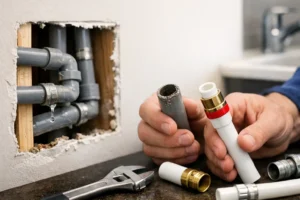
Visible pipe damage is another reason to act quickly. Bulging, flaking, cracking, or distortion near fittings should be assessed by a licensed plumber. Do not squeeze, bend, or try to patch aging Poly B yourself. A temporary repair may stop an active drip, but it does not answer why the pipe or fitting failed in the first place.
If you have already had more than one Poly B repair, replacement planning becomes more practical. Repeated service calls, restoration costs, and the disruption of opening finished walls can add up quickly. At that point, a targeted or whole-home replacement may offer better long-term value than continuing to repair one section at a time.
Why Poly B Systems Fail
Poly B plumbing does not have one single failure point. Its performance depends on the installation, the age of the pipe, the fittings used, local water chemistry, water pressure, and exposure to heat or sunlight. Some systems develop issues at connections, while others show pipe deterioration after years of normal use.
Certain disinfectants used in municipal water supplies can contribute to degradation over time. High pressure and pressure fluctuations can also place added strain on older piping and fittings. Homes with well systems may have different concerns, including mineral content, pressure tank settings, and water treatment equipment that affects the plumbing environment.
This does not mean every home with Poly B needs an immediate full repipe. It means the system should be evaluated based on its actual condition and your plans for the property. A home with accessible plumbing, no leak history, stable pressure, and a recent inspection may allow for a planned replacement timeline. A home with hidden leaks, aging fittings, or finished basements below bathrooms may call for faster action.
Replace Everything or Start With High-Risk Areas?
There is no one answer for every property. Whole-home replacement removes uncertainty from the remaining Poly B system and can be the right choice for homeowners planning to stay in the house, preparing for a major remodel, or dealing with multiple past leaks. It can also be easier to coordinate when walls and ceilings are already open for renovation work.
A phased approach can make sense when the budget is limited or plumbing access is difficult. A plumber may recommend replacing exposed lines, problem areas, bathroom supply lines, laundry connections, or sections near water heaters first. This can reduce immediate risk, but it does leave older pipe elsewhere in service. The trade-off is straightforward: phased work can spread out the cost, while a full replacement offers greater confidence that the legacy piping is no longer a future concern.
The right scope should be based on a detailed inspection, not a guess from one visible pipe in the utility room. A licensed plumber can identify accessible Poly B runs, evaluate fittings, check for signs of past repairs, and explain where water damage would be most likely if a hidden line failed.
What to Expect During a Poly B Replacement
A professional replacement starts with a clear assessment of the home’s plumbing layout. The plumber identifies supply lines, shutoff locations, fixtures, water heaters, and areas where new piping can be routed with minimal disruption. Depending on the property, work may involve access through unfinished utility spaces, ceilings, wall sections, or cabinetry.
Most replacement projects use modern approved piping materials selected for the application and local code requirements. The goal is not simply to install new pipe. It is to build a reliable system with proper fittings, secure connections, accessible shutoffs where practical, and pressure-tested workmanship.
Before work begins, ask for a written scope that explains what is being replaced, what access is required, how water shutoffs will be handled, and whether wall or ceiling restoration is included. Transparent flat-rate pricing and a clear timeline help homeowners avoid surprises. If a contractor cannot explain the scope in plain language, ask more questions before approving the work.
For occupied homes, a good plumbing team will also plan around daily routines. You should know when water will be off, which bathrooms or fixtures may be unavailable, and whether pets, children, tenants, or business operations need special accommodation. Clear communication matters just as much as the pipe itself.
Do Not Wait for a Sale or an Insurance Problem
Many homeowners first ask about Poly B replacement when they are preparing to list their home or after an insurer raises questions. Those are valid reasons to investigate, but waiting until a transaction or claim is already underway can limit your options. A buyer may request credits, a closing schedule may become tighter, or an unexpected leak may force rushed decisions.
If you are considering selling within the next few years, an inspection can help you decide whether replacement, documentation of system condition, or a repair allowance makes the most sense. If you plan to remain in the home, replacement can be scheduled around your budget and other improvements instead of under emergency pressure.
Poly B Plumbing helps homeowners, landlords, and local businesses assess aging plumbing systems with straightforward recommendations, clear estimates, and licensed service. The goal is not to pressure every customer into the largest possible job. It is to identify the risk, explain the options, and complete the work properly when replacement is the right call.
A hidden plumbing leak rarely announces itself before it becomes expensive. If your property has Poly B pipe, a professional inspection now can give you the time and information to make a calm decision before your ceiling, flooring, or business schedule makes it for you.