A well system rarely gives much thought to its own operation – until the water pressure drops during a shower or the faucet runs dry. Knowing your well system components helps you recognize what is normal, describe a problem clearly, and get the right service before a small issue turns into a no-water emergency.
For rural homeowners, a private well is not one piece of equipment. It is a connected system that brings water from underground, maintains pressure in the home, and may treat the water before it reaches a tap. The exact setup depends on the well depth, water quality, household demand, and age of the property.
The Main Well System Components
The well, casing, and cap
The well itself is the drilled opening that reaches the groundwater source. A durable casing lines that opening, helping keep soil, surface water, and contaminants out. At the top, a secure well cap protects the opening from insects, debris, and runoff.
A damaged or loose cap should not be ignored. It can allow contamination into the water supply, particularly after heavy rain or snowmelt. Keep the area around the well clear, graded to drain away from it, and free from materials that could affect water quality.
The well pump and drop pipe
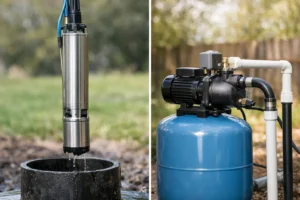
Most modern drilled wells use a submersible pump installed deep inside the well. The pump pushes water upward through a drop pipe and into the home. Electrical wiring powers the pump, and some systems also have a control box that helps start and operate the motor.
Because the pump is below ground, diagnosing a problem is not always simple. A loss of water can come from a failed pump, electrical issue, damaged wire, low well yield, or a problem elsewhere in the pressure system. Replacing a pump without confirming the cause can lead to unnecessary expense.
The pitless adapter
In cold-weather areas, the water line typically exits the well through a pitless adapter below the frost line. This fitting connects the underground line from the well to the line serving your home while allowing the pump assembly to be removed for service.
It is an out-of-sight component, but it matters. Leaks or connection issues at the adapter can affect pressure and may require specialized well service to access safely.
The pressure tank, switch, and gauge
Once water enters the home, the pressure tank stores a reserve of pressurized water. This reduces how often the pump has to turn on and off. The pressure switch tells the pump when to start and stop, while the pressure gauge shows the system pressure.
A healthy system usually cycles between a lower cut-in pressure and a higher cut-out pressure. If the pump turns on every time someone uses a small amount of water, the pressure tank may have lost its air charge or its internal bladder may be failing. Short cycling puts extra wear on the pump and should be addressed promptly.
Water Treatment Is Part of the System Too
Many private well systems include equipment after the pressure tank, such as a sediment filter, iron filter, water softener, ultraviolet treatment unit, or other treatment devices. These components improve water quality, but they also need regular attention.
A clogged filter can reduce flow throughout the house. A treatment system that is overdue for maintenance may affect taste, odor, staining, or water quality. The right treatment depends on current water test results, not just what was installed years ago. Water conditions can change over time.
Warning Signs Worth Acting On
Changes in performance are often the first sign that a well system needs attention. Watch for pressure that surges or fades, air spitting from faucets, unusual noises near the pressure tank, cloudy or discolored water, or a sudden increase in pump cycling. A higher electric bill can also point to a pump that is working harder than it should.
Not every symptom means the pump has failed. For example, low pressure at one fixture may be a local plumbing issue, while low pressure throughout the home points more strongly to the well or pressure system. Clear observations help a licensed technician narrow down the cause faster.
Simple Care That Prevents Bigger Problems
Homeowners should avoid adjusting pressure-switch settings or electrical components without the right training. Well systems combine water and electricity, and incorrect adjustments can damage equipment or create a safety risk.
Instead, pay attention to how the system behaves, replace serviceable filters on schedule, protect exposed pipes from freezing, and arrange an inspection when pressure becomes inconsistent. Periodic maintenance is especially worthwhile before winter, after extended vacancy, or when moving into an older rural home.
Poly-B Plumbing can inspect well pumps, pressure tanks, related plumbing, and water-treatment connections to identify the source of a problem without guesswork. A well system does not need to be complicated to own, but it does need prompt attention when something changes. Keeping track of those changes is one of the simplest ways to protect reliable water at home.