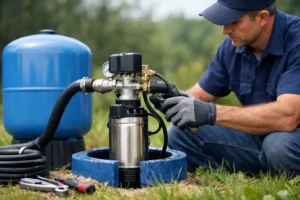
A well pump can fail without much warning: low pressure at the kitchen sink, a pump that runs constantly, or no water at all. Changing your submersible well pump is not a typical plumbing repair because the equipment sits deep inside the well and is connected to electrical wiring, water pipe, and a safety rope. Getting the diagnosis right before pulling the pump can prevent an unnecessary replacement and protect your water supply.
When a Well Pump May Need Replacement
A sudden loss of water is the clearest sign, but it does not automatically mean the pump has failed. A tripped breaker, failed pressure switch, damaged control box, low well yield, or a leak in the supply line can create similar symptoms. Replacing a working pump will not solve those problems.
Signs that deserve a professional inspection include weak or fluctuating water pressure, air sputtering from faucets, unusually high electric use, frequent cycling, or discolored water after the system has been running. A pump that continues running after water use has stopped may be struggling to build pressure or may be sending water into a leak.
Pump age matters, too. Many submersible pumps provide years of dependable service, but lifespan depends on water quality, how often the system cycles, the depth of the well, and whether the pump was sized correctly from the start. Sand, sediment, mineral buildup, and repeated pressure-tank issues can shorten its working life.
Changing Your Submersible Well Pump Requires Planning
The first step is shutting off power at the electrical panel and confirming the circuit is de-energized. Water and electrical components are a serious combination, especially around a wet well casing. The well cap should then be opened carefully to avoid dropping dirt, insects, tools, or debris into the water source.
Pulling the pump is where the physical challenge begins. The pump may hang hundreds of feet below ground on a long run of pipe, cable, and safety line. That assembly is heavy, awkward, and easily damaged if it is pulled without the right equipment. Older installations can also have brittle pipe, worn wiring, or corroded fittings that fail as the pump is raised.
Once the pump is out, the work should not stop at installing a replacement. The drop pipe, electrical cable, splice connections, check valve, torque arrestor, and safety rope all need inspection. Reusing worn parts may save a little upfront, but it can mean pulling the well again soon after.
Correct Pump Sizing Matters
A replacement pump should match the well’s depth, static water level, recovery rate, household demand, and pressure system. Bigger is not always better. An oversized pump can cycle too often, increase wear on the motor and pressure tank, and put extra strain on the well. An undersized pump may not provide adequate pressure when more than one fixture is running.
The pressure tank and switch should also be checked during the repair. A failing tank bladder or incorrect pressure setting can make a new pump work harder than it should. A complete diagnosis looks at the whole well system, not just the equipment at the bottom of the well.
What Happens After Installation
After the new pump is lowered into place, the system needs to be connected, pressurized, and tested. The installer should verify the pressure cut-in and cut-out settings, inspect for leaks, and make sure the pump shuts off properly when the tank reaches pressure. Water should be run long enough to clear any disturbance from the work and confirm steady flow at fixtures.
If sediment or discoloration appears, the cause may be related to the well itself rather than the replacement pump. This is why clear communication matters. Homeowners should know what failed, what was replaced, what condition the related components were in, and what maintenance may help avoid another unexpected outage.
Why Professional Service Is Often the Safer Choice
A submersible pump replacement can require specialized lifting tools, electrical testing equipment, and knowledge of well-system components. It also calls for careful sanitation practices to protect the water supply. For rural homeowners in North Bay, Sturgeon Falls, Bonfield, and Powassan, a licensed professional can diagnose the cause of the failure, recommend the right pump for the property, and provide clear pricing before work begins.
Poly-B Plumbing approaches well pump work as a system repair, not a quick equipment swap. That means checking the components that affect pump life and helping property owners make an informed decision when repair versus replacement is not obvious.
If your water pressure changes or your pump begins running differently, act before a complete loss of water turns into an emergency. A timely inspection can give you a clearer answer and a more dependable plan for your well system.