A burst pipe rarely happens at a convenient time. It is often discovered during a cold snap, after returning to a cottage, or when water starts appearing through a ceiling. The immediate question is usually, “What will this cost?” Burst pipe repair cost depends on much more than replacing one damaged section of pipe. The location of the break, the time of day, access behind walls, and the amount of water released can all change the final price.
For homeowners and property managers across North Bay and surrounding communities, the best way to control the cost is to act quickly. Shut off the water, protect the area, and have a licensed plumber identify the source before a small failure becomes a larger restoration project.
What Affects Burst Pipe Repair Cost?
The plumbing repair itself may be straightforward, but every burst pipe situation is different. A visible split in an unfinished basement is very different from a pipe that has frozen and ruptured behind a finished kitchen wall or above a commercial ceiling.
Where the pipe is located
Accessible pipes are generally faster and less expensive to repair. A break near a utility room, crawl space, or open basement ceiling may only require isolating the line and replacing a short section of pipe.
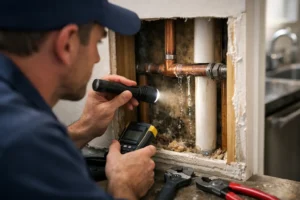
Costs rise when the pipe is behind drywall, under flooring, inside a ceiling, or buried beneath a slab. The plumber may need to open and later coordinate repairs to finished surfaces to safely reach the damaged line. In some cases, the visible leak is not the actual break, so diagnostic work is needed before the repair can begin.
The pipe material and condition
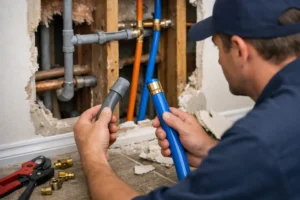
Copper, PEX, CPVC, galvanized steel, and Poly B piping each require a different repair approach. Replacing a damaged fitting on newer PEX can be relatively contained. Older galvanized plumbing may reveal corrosion or additional weak areas once work begins.
Poly B piping deserves particular attention in older Ontario homes. A single failed section can sometimes be repaired, but a plumber should also assess the condition of the surrounding system. If the material is deteriorating or showing repeated failures, patching one spot may only delay a more significant replacement decision.
Emergency timing and travel conditions
After-hours, weekend, and holiday calls often cost more than scheduled daytime service because they require immediate dispatch. Severe winter weather can also make travel and access more difficult in rural areas, cottages, and seasonal properties.
That said, waiting until regular business hours is not always the less expensive choice. If water is actively flowing, the added damage to insulation, drywall, flooring, electrical components, and belongings can quickly exceed the difference in emergency service pricing.
How much water damage occurred
A plumber repairs the pipe. Water damage restoration may be a separate part of the overall expense. If a break is caught within minutes and the water is shut off, drying and cleanup may be limited. If water has been running for hours, the property may need moisture assessment, extraction, dehumidification, drywall removal, mold prevention, and repairs to finished surfaces.
For this reason, the total burst pipe repair cost should be viewed in two parts: stopping and fixing the plumbing failure, then addressing any damage caused by the water.
Typical Costs for a Burst Pipe Repair
There is no honest one-price answer for a burst pipe. A simple, accessible repair during normal service hours may cost a few hundred dollars. An emergency repair involving difficult access, multiple damaged sections, or frozen lines can range from several hundred to well over a thousand dollars before restoration work.
If water has damaged ceilings, hardwood, cabinetry, insulation, or commercial inventory, the total property loss can reach several thousand dollars or more. Insurance may help with sudden and accidental water damage, depending on the policy and the circumstances. Frozen-pipe claims can be affected by whether the building was heated, occupied, and properly maintained, so document the issue and contact your insurer promptly.
A clear estimate should explain what is included: diagnostic time, emergency dispatch if applicable, the repair method, materials, access work, and any recommended next steps. Be cautious of a price quoted without enough information to understand the location and extent of the problem. A flat-rate repair price can provide useful certainty, but it should be based on an actual assessment rather than a guess over the phone.
What to Do While You Wait for a Plumber
The first few minutes after discovering a burst pipe matter. Your priority is to stop the water and make the space safer, not to attempt a permanent repair yourself.
- Shut off the main water supply. Every homeowner and commercial property manager should know where the main shutoff is located and make sure it can be turned easily.
- Turn off power to affected areas if water is near outlets, light fixtures, appliances, or electrical panels. Do not enter standing water where an electrical hazard may exist.
- Open faucets after shutting off the main supply to relieve pressure and drain remaining water from the lines.
- Move valuables, place containers under drips where safe, and take photos or video of the damage for insurance records.
Avoid using an open flame to thaw a frozen pipe. Heat guns, torches, and improvised heaters can damage plumbing, start a fire, or create a dangerous situation. A licensed plumber can determine whether a line is frozen, where the blockage is, and whether the pipe has already split.
When a Repair Is Not the Best Long-Term Answer
A single burst caused by an isolated freeze may only need a targeted repair and better insulation around that area. But repeated leaks, aging pipe materials, poor water pressure, discolored water, or multiple freeze-ups point to a larger issue.
For example, a cottage with plumbing routed through an unheated exterior wall may need the line rerouted or better protected, not merely patched. A rental property with older Poly B piping may benefit from a planned replacement rather than repeated emergency calls and tenant disruption. In a restaurant or office, a temporary repair may restore service quickly, while a scheduled follow-up can replace vulnerable piping with minimal interruption to operations.
This is where a professional inspection is valuable. The lowest immediate repair cost is not always the lowest cost over the next few years. A good plumber will explain whether a repair is suitable, what risks remain, and what a more permanent solution would involve without pressuring you into unnecessary work.
How to Reduce the Risk of Another Burst Pipe
Ontario winters put exposed plumbing under real stress, especially in basements, garages, crawl spaces, exterior walls, vacant homes, and seasonal properties. Prevention is usually far less expensive than an emergency repair.
Keep indoor temperatures consistent, including when you are away. Seal drafts around areas where pipes run, insulate exposed plumbing where appropriate, and disconnect exterior hoses before freezing weather arrives. If a property will be vacant for an extended period, consider a winterization plan and arrange regular checks. Property owners with well systems, sump pumps, or older plumbing should also include those components in seasonal maintenance discussions.
For commercial spaces, make sure staff know where shutoff valves are located and who to call after hours. A short response plan can protect equipment, inventory, and business operations when a leak is discovered.
Get a Clear Answer Before Damage Spreads
When a pipe bursts, fast action protects your home or business, but clear communication matters too. A licensed local plumber should tell you what failed, what can be repaired now, what may need follow-up attention, and how the pricing is being handled. Poly B Plumbing provides straightforward assessments for urgent plumbing problems across the region, with licensed service and transparent recommendations.
If you suspect a frozen or burst pipe, shut off the water if it is safe to do so and request help right away. The quicker the source is controlled, the more options you have to keep the repair focused and the damage limited.