A sink that fills with cloudy water while dinner dishes are still on the counter is more than an inconvenience. When you need to unclog kitchen sink drains, the right first step can clear a simple grease buildup without damaging the pipes, disposal, or connections below the cabinet.
Most kitchen sink clogs build gradually. Cooking grease cools inside the drain, food particles catch on it, and soap residue adds another sticky layer. In homes with older plumbing, a partially restricted drain line can make that buildup happen faster. The goal is to clear the blockage safely, then pay attention to whether it is a one-time clog or a sign of a larger drain problem.
Before You Unclog a Kitchen Sink, Check for Warning Signs
Start by looking at how the sink is behaving. If only the kitchen sink drains slowly and the water eventually goes down, the clog is often near the sink trap or in the first section of the branch drain. If both bowls of a double sink back up, or water rises in the other bowl when you run the disposal, the blockage may be farther down the line.
Do not keep running the faucet if water is collecting under the sink. Open the cabinet and inspect the drain trap, disposal connection, dishwasher drain hose, and shutoff valves for leaks. Put a bucket and towels below the drain before attempting any work.
A few conditions call for a professional sooner rather than later: repeated clogs, sewage odors, gurgling from nearby fixtures, water backing up into the sink when the dishwasher runs, or slow drains in more than one room. Those symptoms can point to a blockage beyond the kitchen sink itself.
Safe Ways to Unclog a Kitchen Sink
Begin with the least aggressive method. Avoid reaching for harsh chemical drain cleaners. These products can sit in a blocked pipe, damage certain plumbing materials and seals, create dangerous splashes, and make later repair work less safe. They also rarely remove the heavy grease and food buildup causing recurring kitchen clogs.
Try hot water and dish soap for grease buildup
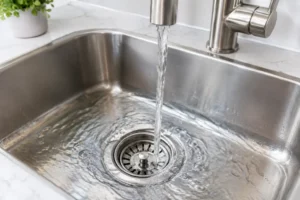
If the sink is draining slowly rather than fully blocked, remove standing water as best you can. Add a generous amount of grease-cutting dish soap, then slowly pour very hot tap water down the drain. For many homes, very hot tap water is the safer choice than boiling water, especially if the drain system includes PVC pipe or older connections.
Let the water run for a few minutes. This may soften and move light grease buildup, but it will not solve a solid food blockage or an object lodged in the drain.
Use a sink plunger correctly
A cup-style sink plunger is often effective for a clog close to the drain opening. Fill the sink with enough water to cover the rubber cup. If you have a double-bowl sink, seal the unused drain tightly with a wet rag or stopper. Without that seal, pressure escapes through the other side instead of pushing the clog loose.
Place the plunger flat over the drain and pump firmly 10 to 15 times. Keep the seal intact throughout the motion. Then lift the plunger and test the drain with a small amount of water. Repeat once or twice if needed, but stop if water begins leaking beneath the cabinet.
If the sink has a garbage disposal, make sure the disposal is off before plunging. Never put your hand inside a disposal, even when you believe the power is disconnected. If it hums but does not spin, turn off power at the breaker and have it inspected rather than forcing the unit.
Clean the P-trap when the clog is close
The curved pipe directly beneath the sink is called the P-trap. It holds water to block sewer gas, and it is also a common collection point for food debris, grease, and small objects. If plunging has not worked, cleaning the trap may help.
Turn off the faucet, place a bucket underneath, and loosen the slip nuts by hand if possible. Drain the trap into the bucket and remove debris. Check the short pipe leading into the wall as well. Reassemble the trap carefully, making sure washers are seated correctly, then run water and check every connection for drips.
This is a reasonable homeowner task when the fittings are accessible and in good condition. It is not the best choice if the piping is corroded, glued in place, cracked, or already leaking. Older metal drain components can fail when disturbed, turning a clog into a repair appointment.
Use a hand auger with care
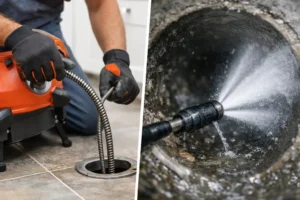
A small hand auger, also called a drain snake, can reach beyond the trap into the kitchen branch line. Feed the cable slowly, turning it gently when you meet resistance. Do not force the cable. Aggressive use can damage fittings, push a blockage deeper, or get the cable stuck.
When you pull the cable back, clean it into a bucket and flush the drain with hot water. If the auger repeatedly hits a hard obstruction or comes back with heavy black sludge, the line may need professional drain cleaning rather than more pressure from a homeowner tool.
What Not to Put Down the Kitchen Drain
A disposal is not a substitute for a trash can. Even a working disposal only breaks food into smaller pieces. It does not prevent grease from coating the pipes farther down the line.
Keep cooking oil, bacon grease, butter, sauces, coffee grounds, flour, rice, pasta, eggshells, fibrous vegetable scraps, and large food scraps out of the drain. Grease should cool in a disposable container before going into the trash. Coffee grounds and starchy foods may look harmless, but they can form a dense paste inside the drain.
For properties with frequent cooking, including rental homes and commercial kitchens, regular drain maintenance is often less expensive than waiting for a full backup during a busy day.
When a Kitchen Sink Clog Needs a Plumber
A clog that returns soon after clearing is rarely just bad luck. It may mean grease has accumulated farther into the line, the pipe has a buildup problem, or the drain has an issue with slope, damage, or root intrusion outside the home. In some cases, the kitchen drain shares a line with other fixtures, so a restriction can create backups elsewhere.
Call a licensed plumber if plunging and trap cleaning do not restore normal drainage, if the sink backs up while the dishwasher runs, or if you notice leaks, gurgling, or odors. A professional can identify where the blockage is located and use the appropriate equipment to clear it without guessing. For a stubborn drain, that may involve mechanical drain cleaning or camera inspection rather than another bottle of cleaner.
This matters for landlords and business owners as well. Repeated sink backups can cause cabinet damage, flooring damage, lost kitchen access, and disruption for tenants or staff. Addressing the drain line early helps avoid a bigger cleanup later.
Keep the Drain Clear After the Repair
Once the sink is flowing normally, make a few small changes that reduce future buildup. Scrape dishes into the trash before rinsing them, collect grease separately, and run water before and after using the disposal. Periodically flushing the kitchen drain with hot tap water and dish soap can help move light grease residue before it hardens.
If your sink has clogged more than once in a short period, do not treat it as a normal household chore. A clear explanation, proper diagnosis, and a lasting repair are worth more than a temporary drain opening. Poly B Plumbing provides straightforward, licensed plumbing support for homeowners, landlords, and businesses that need the kitchen working again without hidden surprises.