A water bill that rises without a clear reason is often the first clue. By the time a hidden plumbing leak leaves a stain on the ceiling or buckles a floor, water may have already been moving through framing, insulation, or cabinets for weeks. Knowing how to locate hidden leaks early can protect your property, avoid mold concerns, and keep a small repair from becoming a major restoration project.
Some leaks are easy to spot, such as a dripping faucet or water under a sink. Others happen behind finished walls, below concrete slabs, under flooring, or in supply lines that only leak under pressure. The goal is not to open walls at random. It is to narrow down where the water is going, stop further damage where possible, and bring in a licensed plumber when the signs point to a concealed issue.
Start With the Water Meter
Your water meter is one of the most useful tools for finding a leak that you cannot see. Start by making sure no one is using water inside or outside the property. Turn off faucets, appliances that draw water, irrigation systems, ice makers, and any equipment connected to a water line.
Check the meter and note the reading. Many meters have a small leak indicator that moves when even a small amount of water passes through the system. If the indicator continues moving while all water use is off, there is likely a leak somewhere on the property.
For a more reliable test, record the meter reading, avoid using water for one to two hours, then check it again. A change in the reading suggests water is still moving through the system. This does not identify the exact location, but it tells you the issue deserves attention.
If you are on a well, the pressure tank and well pump can offer similar clues. A pump that cycles repeatedly when no water is being used may be responding to a pressure loss caused by a leak. Well systems add another layer of complexity, so a professional inspection is usually the safest next step.
Check the Places Leaks Commonly Hide
Hidden leaks do not always announce themselves with a puddle. Look for subtle changes in rooms near bathrooms, kitchens, laundry areas, water heaters, and mechanical rooms. A musty odor, peeling paint, soft drywall, warped baseboards, or a warm section of floor can all point to water where it should not be.
Under Sinks, Behind Toilets, and Around Appliances
Open vanity and kitchen cabinets and feel around supply valves, drain connections, and the bottom of the cabinet. A slow leak can dampen wood or particleboard long before it becomes visible from outside the cabinet.
At toilets, check the floor around the base, the supply connection, and the tank. Water around the base may be caused by a failed seal, loose connection, or condensation, so the source needs to be confirmed before repairs begin. A toilet that runs intermittently can also waste a significant amount of water without leaving moisture on the floor.
Move carefully around washing machines, dishwashers, refrigerators with water dispensers, and water heaters. Look for rust, moisture, staining, damaged hoses, or a damp pan beneath the appliance. Do not ignore a water heater pressure relief valve that drips or a drain pan that regularly collects water. Both require proper diagnosis.
Walls, Ceilings, and Floors
Discolored drywall is a familiar warning sign, but fresh stains are not the only concern. Watch for bubbling paint, hairline cracks that continue to spread, sagging drywall, or trim that starts separating from the wall. In upper-level bathrooms, a ceiling stain below the room may come from a drain, a toilet seal, a shower valve, or a supply pipe. The location of the stain does not always match the location of the leak.
Flooring can provide useful evidence. Wood that cups or lifts, laminate that swells at the seams, loose tile, or warm spots in a concrete floor may signal moisture below. A slab leak can be especially difficult to confirm without professional equipment because the plumbing is concealed beneath the foundation.
Use Your Shutoff Valves to Narrow the Source
If the meter test suggests a leak but you cannot find visible water, isolate parts of the plumbing system. The main shutoff controls water to the property. Individual fixture valves control water to toilets, sinks, appliances, and some outdoor connections.
Turning off a suspected fixture supply can help determine whether the meter stops registering water use. For example, if you suspect a toilet is running, close its supply valve and repeat the meter check. If the leak indicator stops, the toilet or its connected plumbing is a strong suspect.
This approach has limits. Older shutoff valves can fail, and repeatedly turning stiff valves may create another leak. If a valve is corroded, difficult to operate, or begins dripping, stop and arrange service rather than forcing it.
Do Not Forget Outdoor Plumbing
A leak may be outside the building. Check hose bibs, outdoor faucets, irrigation lines, buried water lines, pool connections, and hydrants where applicable. Soft ground, unusually green patches of grass, standing water without recent rain, or a persistent wet area near the water service line can indicate an underground leak.
In cold-weather regions, frozen and thawed pipes can create problems that remain hidden until temperatures rise. A pipe may split during a freeze, then leak slowly once water flow returns. This is common in exterior walls, crawl spaces, garages, unheated basements, and seasonal properties.
Commercial properties should also inspect utility rooms, employee washrooms, kitchens, mechanical equipment, and irrigation zones. A small leak can affect operations, create slip hazards, increase utility costs, and damage inventory or tenant spaces.
When DIY Checks Are Not Enough
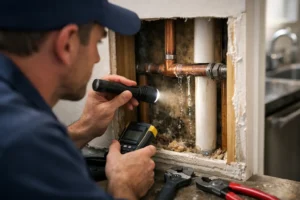
A homeowner can often identify the warning signs, but finding the exact leak without causing unnecessary damage requires the right tools and experience. Licensed plumbers can use moisture meters, pressure testing, acoustic leak detection, thermal imaging, camera inspections, and other methods to investigate concealed plumbing with far less guesswork.
Professional leak detection is especially worthwhile when the water meter shows ongoing use but there is no visible source, when a ceiling or wall is wet, when a slab leak is suspected, or when you have older piping. Properties with Poly B piping deserve prompt attention because the material can deteriorate over time and failures may occur out of sight.
It also makes sense to call quickly if you smell mold, see water near electrical fixtures, notice sewage odors, or find water spreading across floors or ceilings. Shut off the main water supply if you can do so safely, move valuables away from the area, and avoid opening walls or ceilings that may contain electrical wiring.
Protect the Property After the Leak Is Found
Repairing the leak is only part of the job. Wet materials need to be assessed before they remain damp long enough to support mold growth or lose structural integrity. Dry visible surfaces, improve airflow if it is safe to do so, and document the damage with photos for your records or insurance provider.
Ask the plumber what failed and why. A loose fitting may be an isolated repair, while corroded pipes, aging supply lines, repeated freeze damage, or deteriorating Poly B plumbing may call for a larger plan. The right repair depends on the pipe material, accessibility, age of the system, and the risk of another failure nearby.
Poly B Plumbing helps homeowners, landlords, and businesses identify concealed plumbing problems with clear communication, licensed service, and straightforward repair recommendations. Whether the issue is a small fixture leak or a suspected pipe failure behind a wall, getting an accurate diagnosis early gives you more control over the cost and the repair process.
A hidden leak rarely improves with time. If your meter shows unexplained water use or your property is showing early moisture damage, act while the evidence is still small and the repair options are simpler.