A drain can look fine from the outside while deteriorating where you cannot see it. Cast iron drains were built to last, but many older homes and commercial properties now have pipes reaching the point where corrosion, cracks, and internal buildup create repeat plumbing problems.
A slow sink or occasional clog does not always mean the full drain system needs replacement. But repeated backups, leaking joints, or damage found during an inspection should be taken seriously. The right solution depends on the pipe’s condition, where the damage is located, and whether a focused repair will actually solve the problem for the long term.
Why Cast Iron Drains Fail
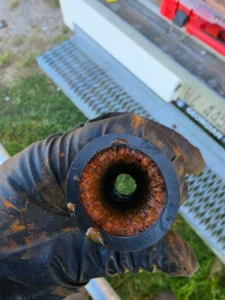
Cast iron was commonly used for drain and sewer piping because it is strong, quiet, and durable. Over decades, though, water flow and waste gradually wear away the inside of the pipe. The interior can become rough and narrowed by rust, scale, and debris. That makes it easier for paper, grease, and other material to catch and form clogs.
Corrosion can also weaken the pipe wall. In some cases, the bottom of a horizontal drain line deteriorates first, leaving a channel that allows water to pass while solids collect behind it. This is one reason a line may seem to drain normally after it is cleared, then clog again a few weeks or months later.
Movement in the building, shifting soil, aging joints, and poor past repairs can add to the problem. In Northern Ontario, freeze and thaw cycles can also expose weaknesses in older plumbing systems, particularly where piping runs through unheated or vulnerable areas.
Signs Your Cast Iron Drains Need Attention
One clogged fixture is often a local issue. Several symptoms occurring together are more likely to point to a larger drain-line concern. Watch for:
- Frequent clogs in the same sink, toilet, tub, or floor drain
- Water backing up in a lower fixture when another fixture drains
- Gurgling sounds, slow drainage, or unpleasant sewer odors
- Damp spots, staining, or leaks around drain piping
- A history of repeated drain cleaning with only short-term improvement
For landlords and commercial property owners, recurring drain complaints are worth investigating early. A backup in a tenant unit, restaurant washroom, or retail space can disrupt operations quickly and lead to more expensive cleanup if the underlying pipe condition is ignored.
Repair or Replace Cast Iron Drains?
A licensed plumber can assess the system with a camera inspection and identify whether the trouble is isolated or widespread. This matters because clearing a blockage and replacing a failing pipe are two very different services.
A targeted repair may make sense when the damaged section is accessible and the rest of the line is in good condition. Replacing a cracked fitting, repairing a short run, or correcting a connection issue can be a practical, cost-effective solution.
Replacement becomes the better choice when corrosion affects long sections of pipe, the line has recurring blockages, or the pipe has lost its structural integrity. It may also be the right time to replace drain piping during a basement renovation, bathroom update, or major property improvement. Opening walls or floors twice costs more than coordinating the work once.
There is a trade-off. Full replacement has a higher upfront cost and can involve access work, but it can eliminate the cycle of emergency calls and repeated cleaning. A partial repair costs less initially, yet it may only postpone problems if the surrounding cast iron is nearing the end of its service life. Clear inspection findings and straightforward pricing help property owners make that decision with confidence.
Why Drain Cleaning Alone May Not Be Enough
Professional drain cleaning is valuable when buildup or a blockage is the main issue. It restores flow and can prevent a backup. However, cleaning cannot rebuild corroded pipe walls, correct a separated joint, or restore a section that has deteriorated from the inside.
Be cautious with frequent use of harsh store-bought chemical cleaners. They may not clear a severe obstruction and can be hard on aging plumbing components. If a drain repeatedly slows down after being cleared, a camera inspection provides far more useful information than another temporary treatment.
Plan Before a Backup Forces the Decision
If your property has original cast iron piping, especially in an older home, do not wait for a major backup to learn its condition. An inspection can show where the pipe is sound, where buildup is developing, and whether repairs should be planned before water damage or service disruption occurs.
For homeowners in North Bay, Sturgeon Falls, Bonfield, and Powassan, Poly-B Plumbing can assess drain concerns, explain the findings in plain language, and recommend work based on what the pipe actually needs. A planned repair is usually easier to schedule, easier to budget for, and far less stressful than an emergency cleanup.