A sump pump can run faithfully for years, then face its biggest test during a storm that also knocks out the power. That is exactly when a backup sump pump review matters. The right backup is not simply the biggest unit on the shelf. It needs to match your sump pit, your drainage conditions, and the kind of failure you are trying to prevent.
For homeowners in North Bay, Sturgeon Falls, Bonfield, and Powassan, spring thaw, heavy rainfall, and sudden power outages can put a basement at risk fast. A properly selected backup system adds a second layer of protection when the primary pump cannot keep up, loses power, or fails unexpectedly.
A Backup Sump Pump Review Starts at the Pit
Before comparing backup systems, look at the primary sump pump and the pit it sits in. A backup pump cannot solve every water problem. If the pit is too small, the discharge line is blocked, the check valve is failing, or water is returning to the pit after each cycle, both pumps may struggle.
Start with a few practical questions. Does your primary pump run often during wet weather? Has it ever tripped a breaker, stopped after a power outage, or run continuously? Is there enough room in the pit for a second pump and a float switch? These details determine whether a battery backup, water-powered backup, or a combination pump is the better fit.
A licensed plumber should also inspect the discharge piping. A reliable backup system needs a clear route to send water away from the foundation. Installing a second pump without addressing a frozen, restricted, or poorly routed discharge line can create a false sense of security.
The Main Types of Backup Sump Pumps
Battery Backup Pumps
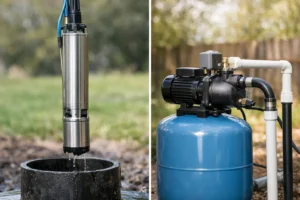
A battery backup sump pump is the most common choice for many homes. It uses a separate battery to operate when the main electrical power is unavailable or when the water level rises above the primary pump’s normal range.
The main advantage is independence from the household water supply. This makes battery systems a practical choice for many properties, including homes with well systems. They can also provide useful alarms for high water, pump operation, or low battery conditions.
The trade-off is runtime. Battery capacity is limited, and a backup pump may not run for long enough during an extended outage or an unusually heavy inflow of water. The actual runtime depends on the battery condition, pump size, lift height, and how often the pump needs to cycle. A homeowner who only checks the battery after an alarm sounds may find out too late that it is no longer capable of doing the job.
For most households, a quality battery backup is a strong fit when it is paired with regular testing and battery replacement based on the manufacturer’s schedule. It is not a set-it-and-forget-it device.
Water-Powered Backup Pumps
Water-powered backup pumps use municipal water pressure to create suction and move sump water out of the pit. Because they do not depend on electricity or a battery, they can continue working through a long outage as long as the municipal water supply remains available.
That extended operating potential is the biggest benefit. They are often worth considering for homes that see frequent outages, have a history of water entering the pit quickly, or need protection for a finished basement with valuable contents.
However, water-powered units are not right for every property. They require sufficient municipal water pressure and use household water while operating. They are generally not suitable for homes supplied by a well because the well pump typically needs electricity. Local plumbing requirements and water usage considerations should also be reviewed before installation.
Combination Sump Pump Systems
A combination system places a primary pump and a battery backup pump together in one package. This can be an efficient option when an aging primary pump needs replacement and the homeowner wants both daily pumping and outage protection addressed at once.
The convenience is appealing, but the system still needs to be sized correctly. A combination unit is not automatically better than a separate primary and backup arrangement. In a pit with limited space, it may be an excellent answer. In a home with unusually high water volume, separate pumps with independent float switches may offer more flexibility and redundancy.
What Matters More Than Pump Horsepower
Horsepower gets attention because it is easy to compare, but it is not the full story. A backup sump pump should be evaluated by how much water it can move at the actual height it needs to lift. That measurement is commonly called head height. The farther water must travel upward and outward, the lower the pump’s effective flow rate can become.
Float-switch design matters just as much. The float is what tells the pump when to start. A backup float should activate at a higher water level than the primary pump so it stays out of the way during normal operation but responds if the water rises too high. A poorly positioned float can leave the backup inactive when it is needed or cause frequent, unnecessary cycling.
Look for a system with a clear alarm. An audible alarm can alert you to high water, a failed primary pump, low battery power, or a charger issue before the basement floods. Some systems also provide remote alerts, which can be valuable for landlords, seasonal properties, and homeowners who travel often. Remote alerts are helpful, but they do not replace a working system or regular inspections.
Battery Backup Sump Pump Review: Questions to Ask
When reviewing battery-powered systems, focus on the complete setup rather than the pump alone. The charger, battery, alarm, float switch, and installation quality all affect performance.
Ask how the system is tested, what type of battery it requires, and what alerts it provides. Also ask whether the backup pump has its own discharge connection or shares piping with the primary pump. Shared piping can work when installed correctly, but check valves and pipe layout need to be handled carefully to prevent one pump from pushing water back through the other.
Avoid choosing strictly by price. A lower-cost system may be appropriate for a low-risk area with occasional light pumping. It may be a poor value for a finished basement, a rental property, or a home where the sump pump runs heavily each spring. The cost of a better backup system is often small compared with repairing flooring, drywall, furniture, and stored belongings after a flood.
Installation Details That Protect the Investment
Backup sump pump installation is not just a matter of setting another pump in the pit. The installer should confirm that the pit is clean, deep enough, and accessible for future service. The discharge route should carry water away from the foundation without creating a tripping hazard, icing concern, or return path back toward the home.
The electrical connection for the primary pump should be properly protected, and the backup components should be easy to inspect. If a battery is stored in the system, it should be positioned safely and remain accessible for maintenance. The alarm should be loud enough to hear in the home, not hidden behind storage boxes or finished walls.
A professional installation also gives you a clear chance to correct related concerns, such as a worn check valve, damaged discharge pipe, or primary pump nearing the end of its service life. Poly-B Plumbing can assess the entire sump system, explain the options in plain language, and provide clear pricing before work begins.
Test Your Backup Before the Storm
A backup system earns its value during an emergency, so testing should happen before one. Check the primary pump periodically by pouring water into the pit and confirming that it starts, drains, and stops properly. Then test the backup according to the manufacturer’s instructions. Many systems have a test button, while others require lifting the backup float carefully.
Keep the pit free of gravel, debris, and loose items that can interfere with a float. Check that the alarm works and inspect the battery status indicator. If the system is sending alerts, confirm that they are reaching the right phone or contact.
An annual plumbing inspection is a practical time to review the pump, backup system, discharge line, and check valves together. This is especially useful before spring thaw or after a season of frequent heavy rain.
A good backup sump pump should give you more than another piece of equipment in the basement. It should give you confidence that when water rises and conditions are at their worst, your home has a second line of defense ready to work.