Hard water rarely announces itself with one dramatic plumbing failure. It shows up in the white crust around faucets, cloudy glasses that never seem clean, stiff laundry, and a water heater that may not perform as efficiently as it should. If you are looking for a water softener North Bay homeowners can count on, the right first step is understanding what is in your water and whether a softener is the right fix for your home.
For many households, especially homes supplied by a private well, water treatment is not a one-size-fits-all purchase. A properly selected system can help protect fixtures and water-using equipment. The wrong system, or one installed without considering the home’s water source and plumbing layout, can add expense without solving the issue you noticed in the first place.
What Hard Water Can Do to a Home
Hard water contains dissolved minerals, primarily calcium and magnesium. Those minerals are not usually a plumbing emergency, but they can leave scale behind wherever water is heated, evaporates, or moves through fixtures over time.
You may notice a chalky film on shower doors, spots on dishes, rough-feeling towels, reduced water flow from a showerhead, or a stubborn ring around sinks and toilets. Soap can be harder to rinse away, and cleaning products may seem less effective. Inside the plumbing system, mineral buildup can collect on faucet aerators, valves, appliance connections, and heating components.
The effect varies from home to home. Two nearby properties can have different water conditions because one is on municipal water and the other uses a well, or because their plumbing, household size, and water use are different. That is why visible scale is a useful clue, not a complete diagnosis.
Water Softener North Bay: Start With a Water Test
Before choosing equipment, test the water. A basic hardness result helps determine whether a softener is warranted and how it should be sized. For private wells, a more complete test is often sensible because hardness may not be the only condition affecting water quality or treatment needs.
Iron, manganese, sediment, acidity, sulfur odors, and bacteria are separate concerns. A standard softener can be affected by some of these issues and may not address them properly on its own. For example, iron can stain fixtures and interfere with softener performance at higher levels. Sediment can shorten the life of valves and filters if it is not handled ahead of the softener.
A licensed plumbing professional can look at the test results alongside your water source, existing treatment equipment, pipe condition, and household demand. That approach avoids guessing based on a neighbor’s setup or a system advertised as suitable for every home.
The Main Types of Water Treatment Systems
The term “water softener” is often used for several different products, but they do not all do the same job. Knowing the difference helps prevent an expensive mismatch.
Ion-Exchange Softeners
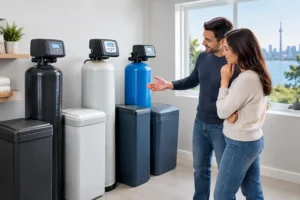
A conventional ion-exchange softener is the most common choice for true hardness reduction. Water passes through resin media that exchanges hardness minerals for sodium or potassium. The system periodically regenerates using a brine solution to refresh the resin.
This option is effective for many homes with hard water, but it needs a properly sized brine tank, access to power, and a safe, code-compliant drain connection for regeneration discharge. It also requires regular salt or potassium replenishment. Sodium-sensitive households should discuss the available options with a qualified professional and consider the full household water plan rather than making assumptions.
Salt-Free Conditioners
Salt-free conditioners are sometimes marketed as softeners, though they generally do not remove hardness minerals from the water. Depending on the product and water conditions, they may alter how minerals behave and reduce some scale adhesion. They do not produce the same soap performance or measurable hardness reduction as an ion-exchange system.
They can suit certain households, particularly where reducing maintenance is a priority, but they are not a direct replacement when the goal is to eliminate hard-water symptoms. Clear expectations matter.
Filtration and Specialty Treatment
Filtration systems are designed for concerns such as sediment, taste and odor, iron, or other specific contaminants. A home may need filtration before a softener, after it, or instead of it. Well systems often benefit from a treatment plan that addresses the actual test results in the right order.
Choosing the Right Size for Your Household
A softener should be sized for both water hardness and water use. An oversized system can cost more than necessary, while an undersized one may regenerate too often, waste salt and water, and struggle to keep up with demand.
Household size is part of the calculation, but it is not the whole story. A family with frequent laundry, multiple bathrooms, large soaking tubs, or regular guests may use far more water than a smaller household. Peak demand also matters. A system needs to provide treated water while showers, appliances, and fixtures are in use.
Metered, demand-initiated regeneration is often a practical feature because it regenerates based on actual water use rather than a fixed calendar schedule. That can improve efficiency, but the system still needs correct programming for local water conditions. The goal is not simply to buy the largest tank available. It is to install equipment that matches the property.
What Professional Installation Should Include
A water treatment installation affects your home’s main water supply, drain connections, shutoff valves, and sometimes electrical access. It should be installed where it can be serviced easily and protected from freezing temperatures. This is especially relevant in North Bay homes with utility rooms, crawlspaces, seasonal properties, or rural well systems.
Professional installation should include a review of the plumbing layout, accessible isolation valves, a proper bypass, secure connections, and a suitable discharge arrangement. The installer should also confirm water pressure, inspect the condition of nearby piping, and explain how the equipment will operate during a power interruption or water shutoff.
It is also worth asking where the unit will sit and how future maintenance will be handled. A softener tucked into an inaccessible corner may be technically installed, but it is not convenient when it is time to add salt, inspect the brine tank, or service a valve. Clear flat-rate pricing and a plain explanation of the work make it easier to plan without surprises.
Maintenance Is Simple, but It Is Not Optional
Most softeners are dependable when maintained. The routine is usually straightforward: keep the appropriate salt or potassium level in the brine tank, break up salt bridges if they form, and watch for changes in water quality or unusual regeneration behavior.
The resin, control valve, injector, and seals may eventually need service. If you use well water, changes in iron, sediment, or other conditions can also affect performance over time. An annual plumbing and water-treatment review can catch small issues before they become a no-water call, a leak, or a costly equipment replacement.
Do not ignore a constantly running drain line, a suddenly high water bill, salty-tasting water from every fixture, or a system that appears to regenerate far more often than normal. Those signs call for a professional inspection.
When a Softener Is Not the Entire Answer
A softener is valuable when hardness is the problem. It is not a cure for every water complaint. Low water pressure may be caused by a restricted pipe, a failing pressure tank, clogged fixtures, or a well-pump issue. Brown water, odors, staining, or cloudy water may require testing and a different treatment solution.
This is where an experienced local plumbing team can make a meaningful difference. Poly-B Plumbing can assess the plumbing side of the problem along with the treatment equipment, so homeowners are not left replacing a system that was never addressing the real cause.
A well-chosen water softener should make daily cleaning easier and help reduce mineral scale on the parts of your home that work hard behind the walls. Start with clear test results, choose equipment for your actual water use, and have it installed in a way that makes future service simple.