A sump pump can sit quietly for months, then become the most important appliance in the house during a hard rain or fast snowmelt. Knowing how to test sump pump operation before wet weather arrives gives you time to correct a problem on your schedule, rather than after water reaches the basement floor.
Most homeowners can perform a basic test in a few minutes. The goal is simple: confirm that the pump turns on, moves water out of the pit, and shuts off properly. If anything seems slow, noisy, or unreliable, arrange service before the next storm puts the system under pressure.
When to Test Your Sump Pump
Test a sump pump at least twice a year, ideally in early spring and again before the wetter fall season. In North Bay and nearby communities, spring testing matters because frozen ground, thawing snow, and heavy rainfall can send a large amount of water toward a foundation in a short time.
You should also test the pump after a power outage, after work has been done around the basement, or whenever you notice a damp smell near the sump pit. Homes with a history of water issues, finished basements, or older pumps may benefit from more frequent checks.
A quick test is especially worthwhile before leaving town for several days. A pump that fails while nobody is home can turn a small mechanical issue into damaged flooring, drywall, storage, and belongings.
How to Test a Sump Pump With Water
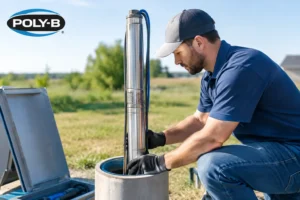
Start by looking at the pit and the area around it. Make sure the pump is plugged into a working outlet, the cord is not damaged, and nothing is blocking the float switch. The cover should fit securely, but it needs to allow the float and discharge pipe to operate without restriction.
Pour Water Into the Pit
Slowly pour a bucket of water into the sump pit. Add enough water to raise the float switch or activate the pump’s built-in sensor. Do not use boiling water, chemicals, or anything that could damage the pump or leave debris behind. Plain water is all you need.
As the water level rises, watch for the pump to turn on. A properly working pump should start without repeated clicking, humming, or a long delay. It should draw down the water level steadily, then shut off once the float drops back to its normal position.
The pump should not run continuously after the pit is empty. Constant running can point to a stuck float, a failed switch, a discharge issue, or a pump that is struggling to move water.
Confirm Water Is Leaving the Property
While the pump is running, check the outdoor discharge point if it is safe to do so. You should see water leaving the pipe away from the foundation. This step matters because a pump can sound like it is working while a blocked, frozen, disconnected, or damaged discharge line sends water nowhere useful.
The discharge should direct water far enough from the home that it does not flow back toward the foundation. Avoid routing water where it can create icy walkways, affect a neighbor’s property, or pool beside the building.
If you cannot see water at the outlet, stop the test and have the system inspected. The problem may be as simple as a blocked line, but it can also involve a failed check valve or an issue with the discharge pipe.
Check the Float Switch and Power Supply
The float switch is one of the most common failure points in a sump system. It tells the pump when to start and stop. During the water test, make sure the float rises freely and does not catch on the pit wall, power cord, or discharge pipe.
Some pumps have a vertical float, while others use a tethered float. A tethered float needs enough room to move, but too much tether length can cause it to get caught or fail to activate at the right water level. Do not force or bend the float mechanism.
Next, confirm that the outlet has power. If the pump is connected to a ground-fault circuit interrupter outlet, check whether the outlet has tripped. Reset it only if there is no sign of moisture, damaged wiring, or an electrical issue. A sump pump should have a reliable dedicated power source whenever possible, not a crowded extension cord or power bar.
A battery backup system should be tested according to its controls as well. Main pumps can work perfectly until a storm causes a power outage, which is exactly when a backup system may be needed. If the backup sounds an alarm, does not start, or shows a low battery warning, schedule service before relying on it.
Warning Signs Your Sump Pump Needs Service
A successful water test is reassuring, but it does not guarantee the pump is in perfect condition. Pay attention to performance changes. A pump that runs louder than usual, vibrates heavily, cycles on and off too often, or takes a long time to empty the pit may be nearing failure.
Other warning signs include a musty basement smell, visible rust, standing water in the pit, water around the foundation, or water returning to the pit after the pump shuts off. A failed check valve can allow discharged water to fall back into the basin, causing unnecessary cycling and wear.
Age matters, too. Many sump pumps last several years, but actual lifespan depends on how often they run, water conditions, installation quality, and maintenance. A pump that is approaching the end of its expected service life should be evaluated before it fails during severe weather.
Common Testing Mistakes to Avoid
Do not test a sump pump by reaching into the pit while it is plugged in or running. Keep hands clear of moving parts and standing water around electrical equipment. If there is any concern about damaged wiring, a wet outlet, or repeated breaker trips, stop and call a licensed plumber.
Avoid testing only the pump itself while ignoring the discharge line. The pump, float, check valve, piping, and outdoor outlet all need to work together. A clear pit does not help if the water has nowhere to go.
It is also wise not to wait until a major rainstorm to find out whether the system works. Pumps can fail under heavy demand even if they seemed fine during a quick visual check. Regular testing provides a better chance to catch a weak component early.
When to Call a Licensed Plumber
Call for professional help if the pump will not start, runs but does not remove water, trips the circuit, makes grinding noises, or has a float that sticks. A plumber can check the pump capacity, electrical connection, basin condition, discharge routing, check valve, and backup options to identify the real cause of the problem.
Professional service is also a good idea when replacing an older pump. The right pump size depends on the volume of water entering the pit, the lift required to move water out, and the layout of the discharge piping. Installing a larger pump is not always the answer if the piping or drainage system is the actual restriction.
Poly-B Plumbing helps homeowners and property owners in North Bay, Sturgeon Falls, Bonfield, and Powassan inspect, repair, and replace sump pump systems with clear communication and straightforward pricing. If your test raises questions, it is better to have the system checked while the basement is dry and access is easy.
A few minutes with a bucket of water can reveal whether your sump pump is ready for the next storm. Make the test part of your seasonal home maintenance, and treat any unusual sound, slow performance, or drainage concern as an early warning worth acting on.